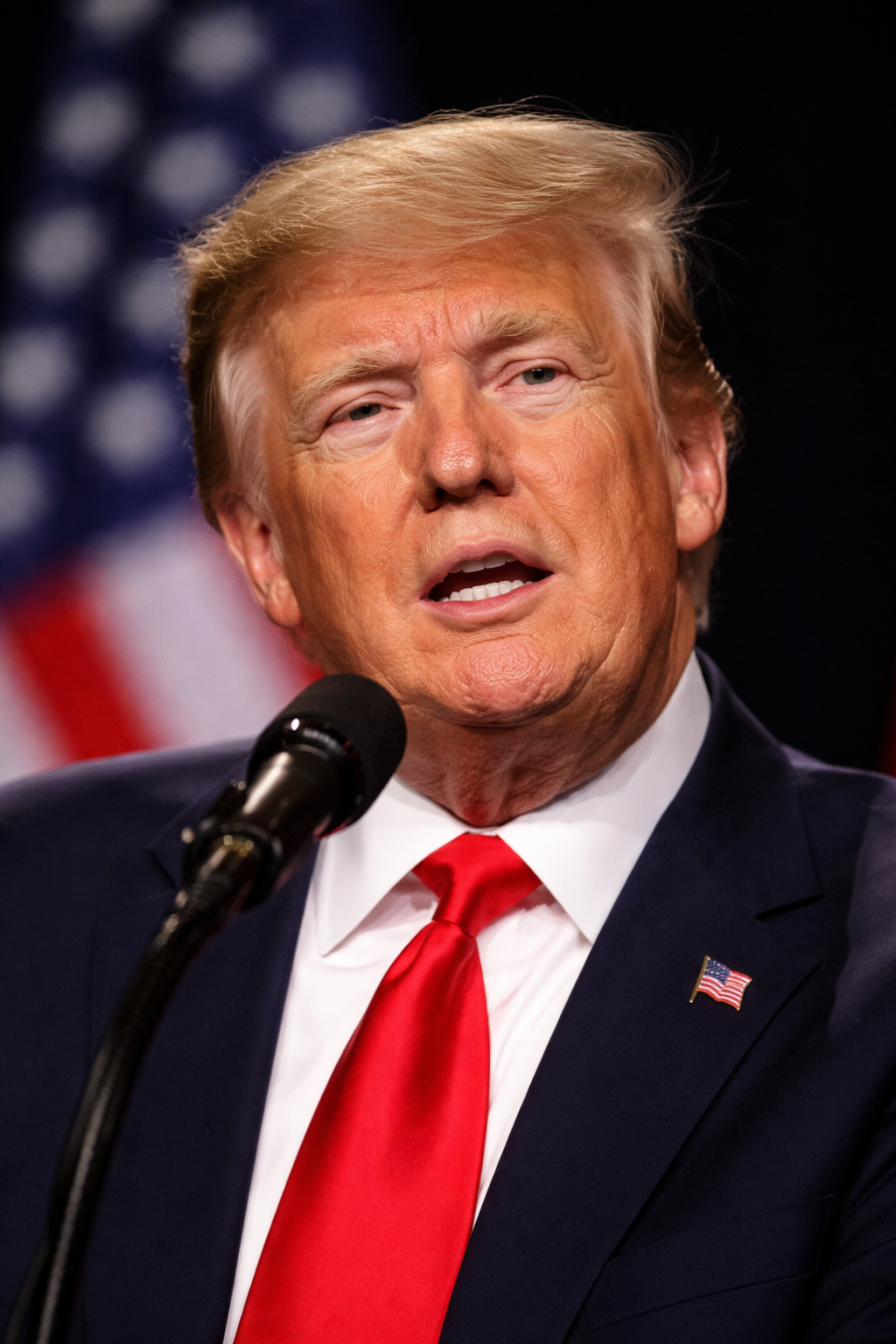
For generations, the United States has stood tall, self-anointed and widely accepted as the torchbearer of modern democracy. Its Constitution shaped nations, its institutions inspired reforms, and its voice, loud and often uncompromising, preached the gospel of freedom, rule of law, and respect for sovereignty. But today, that carefully crafted image is collapsing, crumbling under the weight of contradiction, hypocrisy, and unchecked executive power. At the centre of this unravelling stands Donald Trump.
The ongoing military assault on Iran raises one fundamental question: Where is the democracy America so proudly exports? In any functioning democracy, the decision to go to war is not the preserve of one man; it is debated, scrutinised, and sanctioned by the people’s representatives. Yet, in this case, bombs reportedly began to fall before meaningful congressional approval could be secured. What does this say about the so-called separation of powers? If Congress, the very symbol of the people’s voice can be sidelined in matters of war, then American democracy is not being practised; it is being performed.
Equally troubling is the blatant disregard for international law. The United Nations Charter is clear that no nation has the right to attack another without justification grounded in self-defence or explicit global consent, yet the strikes on Iran appear to defy these very principles. Worse still are reports that international inspectors found no conclusive evidence of an active nuclear weapons programme in Iran; if true, then the justification for war becomes not just weak but dangerously misleading. What remains, then, is a disturbing reality, a superpower acting not as a guardian of global order, but as its greatest violator.
Iran is not an isolated case. In Venezuela, the controversial capture of President Nicolás Maduro by U.S. forces sent shockwaves through the international community and signalled a willingness to bypass diplomacy in favour of direct intervention. Now, with threats looming over Cuba, a pattern is emerging, one that suggests not the spread of democracy but the expansion of dominance. This is not foreign policy guided by principle; it is power exercised without restraint.
Even within its own borders, the cracks are widening. The American system is built on checks and balances, on the idea that no branch of government should wield unchecked authority, yet when a president can initiate war without robust legislative oversight, that balance is not merely weakened, it is broken. Democracy cannot survive where accountability is optional.
For decades, nations across Africa, Asia, and beyond have modelled their governance systems on American democratic ideals, guided by the assumption that the United States not only preached democracy but practised it with consistency and integrity. Today, that assumption is in doubt, and when actions contradict ideals so glaringly, the result is not just policy failure but moral collapse.
The implications are far-reaching, for if the leading advocate of democracy can ignore its own rules, bypass its own institutions, and defy international law, then what incentive remains for others to uphold those same standards? The message is clear and deeply troubling: democracy, it seems, is optional when power is absolute.
Donald Trump may well be remembered not as a defender of democracy but as the man who exposed its fragility in the very nation that claimed to embody it. The United States once stood as a beacon, a guiding light for nations striving toward democratic governance, but today it risks becoming something else entirely, a warning signal of how easily democratic ideals can be eroded when power goes unchecked. And for a world that once believed in the American example, that may be the greatest tragedy of all.
The Trial News


No comments yet. Be the first to comment!