
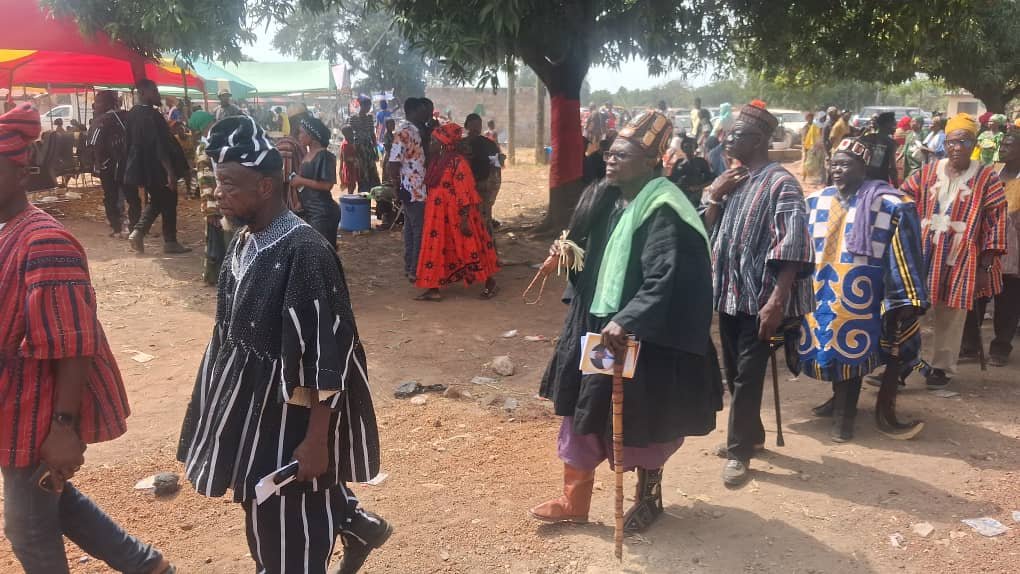
The funeral of the late Naa Professor Daniel Bagah in Nyimbali was not only an occasion to mourn the passing of an illustrious son of the Upper West Region. It was also a remarkable display of the region's rich cultural heritage, traditional identity and communal pride. Among the delegations that brought colour, dignity and excitement to the occasion was that of Kaluri, led by its traditional ruler, Naa Alhaji Ibrahim Baaladong Tindaana II.
The arrival of Kaluri Naa and his entourage added a special touch to the funeral. Their traditional regalia, impressive cultural display and remarkable dancing prowess attracted attention and brought an unmistakable sense of pageantry to the gathering.
The people of Kaluri demonstrated that traditional dancing is much more than entertainment. It is an expression of identity, history, unity and belonging. Their movements were confident and well-coordinated, with dancers responding effortlessly to the rhythm of the traditional music. The energy, agility and graceful footwork on display reflected a people deeply connected to their cultural roots.
There was something particularly captivating about watching the dancers interpret the rhythms with such ease and enthusiasm. Every movement seemed to tell a story, while the accompanying music and excitement of the gathering created an atmosphere of cultural splendour. Their performance added colour to the funeral and reminded those present that even in moments of grief, a community can honour a departed leader while celebrating the traditions and values that define its identity.
The presence of the Kaluri delegation was also a reflection of the cordial relationship that existed between the late professor, Naa Alhaji Ibrahim Baaladong Tindaana II and the people of Kaluri. Their participation was therefore more than a ceremonial appearance. It was a gesture of friendship, solidarity and appreciation for a man whose influence extended well beyond Nyimbali.
The late Naa Professor Daniel Bagah was no ordinary personality. He was a distinguished academic, lecturer, researcher, politician and traditional leader whose life and work touched many people in the Upper West Region and beyond.
His intellectual contributions, commitment to public service and extensive knowledge of traditional institutions and cultural practices made him a respected figure in several spheres of national life. He was not simply a man who acquired academic qualifications and occupied important positions. He was someone who brought his knowledge and experience to bear on the lives of people and the development of his community.
His service as a former member of the Council of State during the previous New Patriotic Party (NPP) administration further demonstrated the confidence reposed in him at the national level. Membership of this important constitutional advisory body placed him among personalities entrusted with offering counsel on matters of national importance.
Yet, beyond his academic accomplishments and political recognition, there was another side of Professor Bagah that endeared him to many: his traditional leadership and willingness to intervene in matters affecting individuals, families and communities.
As a traditional leader, he was known for his deep understanding of customary practices, traditional authority and the delicate relationships that bind communities together. He played an important role in resolving disputes and helping to settle difficult traditional and communal matters. His knowledge of the customs and traditions of the people, coupled with his standing in society, made his intervention valuable to those who sought his counsel.
He understood that traditional leadership was not merely about occupying a stool or exercising authority. It involved listening, reconciling differences, preserving relationships and ensuring that disagreements did not destroy the bonds holding communities together. This understanding earned him considerable respect among the people who had the opportunity to interact with him.
It was this combination of scholarship, traditional wisdom and public service that made him such a distinctive personality. He could engage in intellectual discussions, participate in political discourse and, at the same time, appreciate the importance of customary institutions and traditional values.
His relationship with Naa Alhaji Ibrahim Baaladong Tindaana II and the people of Kaluri was a reflection of the value he attached to friendship, mutual respect and traditional solidarity. Through such relationships, he contributed to strengthening bonds between traditional communities and promoting peaceful coexistence. His passing is therefore felt beyond Nyimbali and his immediate family, particularly among those traditional communities that benefited from his experience, wisdom and counsel.
The large number of mourners who travelled from different parts of the country to Nyimbali was a reflection of the place Professor Dagah occupied in the lives of many people.
The funeral attracted a high-level gathering of personalities from different sectors of society, including traditional authorities, political leaders, academics, public servants, community leaders, professional colleagues, friends and associates. Their presence demonstrated the breadth of relationships he had built across different institutions and walks of life.
It was a gathering that brought together people whose paths might otherwise not have crossed, united by their respect for one man. The presence of such a broad spectrum of society was perhaps one of the clearest indications of the impact he had made during his lifetime.
His death, which followed a short illness, came as a painful loss to those who knew and admired him. Following his passing, the customary rites befitting his position as a traditional leader were observed. In keeping with tradition, his body underwent the customary bruising ritual before arrangements were made for his funeral over the weekend. These rites reflected the traditional significance attached to his position and the customs governing the final passage of a traditional leader.
The death of Naa Professor Daniel Bagah leaves a void that will not easily be filled. The region has lost a man who combined academic distinction with traditional knowledge, political experience and community leadership.
His life offers an important reminder that the true measure of a person's greatness is not simply the titles attached to their name or the positions they occupy. It is also found in the lives they touch, the disputes they help resolve, the relationships they nurture and the positive contributions they make to society.
For the people of Kaluri, the funeral was an opportunity to honour a respected friend whose relationship with their traditional ruler and community was deeply valued. Their colourful cultural display, led by Naa Alhaji Ibrahim Baaladong Tindaana II, added an unforgettable dimension to the occasion and demonstrated the enduring beauty of the region's cultural heritage.
As the people of Nyimbali and the wider Upper West Region come to terms with this painful loss, the memories of Professor Dabagah's scholarship, traditional wisdom and public service will remain part of his enduring legacy.
He may have taken his final bow, but the relationships he built, the knowledge he shared and the lives he touched will continue to speak for him. May his soul rest in perfect peace.
The Trial News
Asaaba Ania
Nov 8, 2026 12:49 pmThe whole show was deserving.