
COLLECT: “SHOW FAVOUR, O LORD, TO YOUR SERVANTS AND MERCIFULLY INCREASE THE GIFTS OF YOUR GRACE, THAT, MADE FERVENT IN HOPE, FAITH AND CHARITY, THEY MAY BE EVER WATCHFUL IN KEEPING YOUR COMMANDS. THROUGH OUR LORD JESUS CHRIST, YOUR SON, WHO LIVES AND REIGNS WITH YOU IN THE UNITY OF THE HOLY SPIRIT, GOD, FOR EVER AND EVER. AMEN”
Wis 12:13,16-19; Ps 83:5-6,9-10,15-16a; Rom 8:26-27; Mt 13:24-43 or 13:24-30
*“BE A GOOD SEED AS YOU WERE CREATED AND NOT A WEED”*.
(Dagaare adage: “Ang la menga” or “Who is the holy one?”)
Just imagine what will happen to our families, communities, societies, country and the world at large, if at any point in time anybody who does anything wrong/bad is eliminated or killed.
Today’s parable in our Gospel, seemingly and humanly speaking, contradicts Jesus’ teaching in Mt 5:29-30, where Jesus says one should pluck out one’s right eye or cut off one’s right hand if this is a cause of one’s sinful deeds. One needs to always grasp the meaning or message deep down in the scriptures; otherwise, one becomes a fanatic. Anyhow, this Gospel is a parable which Jesus employs to teach us about the nature of the world, the Church, God and the last Judgment.
We have read in the gospel how the farmer sowed good seeds, but the enemy in the night went and sowed weeds in the field. The servants of the farmer wanted to pull out the weeds at that tender age, but the farmer did not agree because, by that time, the weeds’ roots were so intertwined with those of the wheat that the weeds could not be weeded off without tearing the wheat out with them. In fact, sometimes it is impossible to separate the two without plucking up or uprooting both. The farmer therefore suggested that both should be allowed to grow until the time of harvest. *It is believed that these weeds and the wheat were so alike that the Jews called them “Bastard wheat”. Even though the weeds could not be separated from the wheat, in the end they had to because the grains of weeds were slightly poisonous, causing dizziness, sickness and were narcotic, very bitter and unpleasant in taste.
Given the meaning of this parable, Jesus teaches that there is always a hostile/enemy power (the devil and his children) in the world and in the Church, seeking and waiting to destroy the good seed – children of God.
Also, in our lives, we can easily identify both the good seed and the hostile power always at war. In the beginning, God created everything good, but Satan, out of envy and jealousy, later introduced (sowed) the hostile power into the world and into our lives. St. Paul puts it beautifully in his testimony that he realises that sometimes he wants to do the good thing, but before he knows, he is doing the opposite (Rom 7:19). There is therefore the need to always be watchful; otherwise, the devil is like a roaring lion, moving around looking for someone to devour. It is also sometimes very difficult to distinguish between people who are good from evil/bad ones. This is because someone may appear to be good but may in fact be evil/bad and vice versa (wolf in sheep's skin). Such are the people the Dagaaba beautifully describe as: “Bang-puori kong bang puo mine”, “Piele kye duna mine”, “Bon la ka laa sugle mine” (all referring to those who are hypocrites).
We are sometimes too quick to classify people and label them as good or bad without knowing all the facts about the person. Sometimes we are so quick to judge other people. Imagine if the farmer had allowed the harvesters to have their way in uprooting the weeds. Definitely some (innocent) wheat would have been affected. Think of a small misunderstanding between you and another person, and you take a very quick and maybe an unreflective decision to have nothing else to do with that person or to decide to eliminate the person. This could be in the marriage life, office, society/association, politics, religion (Church), etc. Imagine how such a decision will affect not only the person involved, but also some innocent people, like the children, coworkers, the electorate, innocent members of the congregation, etc.
We should imitate God, who, though he is master of might; he judges with clemency and governs with leniency. Therefore, those of us who think that we are just and holy must be kind toward others, especially the sinful and the wrongdoer. We should not be quick to judge them because God always gives his people, particularly the sinners, good ground for hope, and he permits them to repent of their sins and wrongdoings. Therefore, also give a chance to the wrongdoer or the enemy.
In our parable, judgment has to wait until harvest time. This is because a man may make great mistakes and then redeem himself/his image, and by God’s grace, atone for his sins, make amends and be saved. On the contrary, a man may live an honourable life and then, in the end, wreck it all by a sudden collapse into sin. It is not right to judge someone by a single act he has committed. We should not judge. Only God has the right to judge. Only God sees all of a man and all of his life. It is God’s will that we stay with the sinner now (at the moment), painful though it may be, so that in due course or in the appropriate time we can receive him in the name of Jesus as a converted sinner. *One remarkable thing to note is that in our natural world, weeds will always be weeds. But in the spiritual world, weeds can become wheat. A sinner can be a potential saint. That is why we have St. Paul, St. Augustine, St. Mary Magdalene, etc.
The question, however, is: who has never sinned in his/her life? We thank our Lord Jesus Christ for His Church, which has very humble and tiny beginnings like a mustard seed and yeast, but which has now grown and continues to grow in great proportions in the world. The Church, indeed, "is not a refrigerator of Saints, but a hospital for Sinners". Therefore, let us always acknowledge that we are sinners as we go to Church, and always approach the Lord, the Great Healer, to heal us, instead of coming to Church pretending that we are saints and righteous or holy people. Lord, may you continue to show us your patient kindness, love, mercy and forgiveness through the celebration of the Church’s Sacraments. Amen. Happy Sunday, and stay blessed.
WE MEDITATE TODAY, SUNDAY, ON THE GLORIOUS MYSTERIES: ‘THE RESURRECTION, THE ASCENSION, THE DESCENT OF THE HOLY SPIRIT, THE ASSUMPTION, AND THE CORONATION ’. (WE PRAY FAITH, HOPE, LOVE OF GOD, GRACE OF A HAPPY DEATH AND TRUST IN MARY’S INTERCESSION) “Hail Mary, full of grace, the Lord is with you, blessed are you among women, and blessed is the fruit of your womb, Jesus: Holy Mary, Mother of God, pray for us, sinners, now and at the hour of our death, Amen”.
PRAYER: “GRACIOUSLY BE PRESENT TO YOUR PEOPLE, WE PRAY, O LORD, AND LEAD THOSE YOU HAVE IMBUED WITH HEAVENLY MYSTERIES TO PASS FROM FORMER WAYS TO NEWNESS OF LIFE. THROUGH CHRIST OUR LORD. AMEN.”
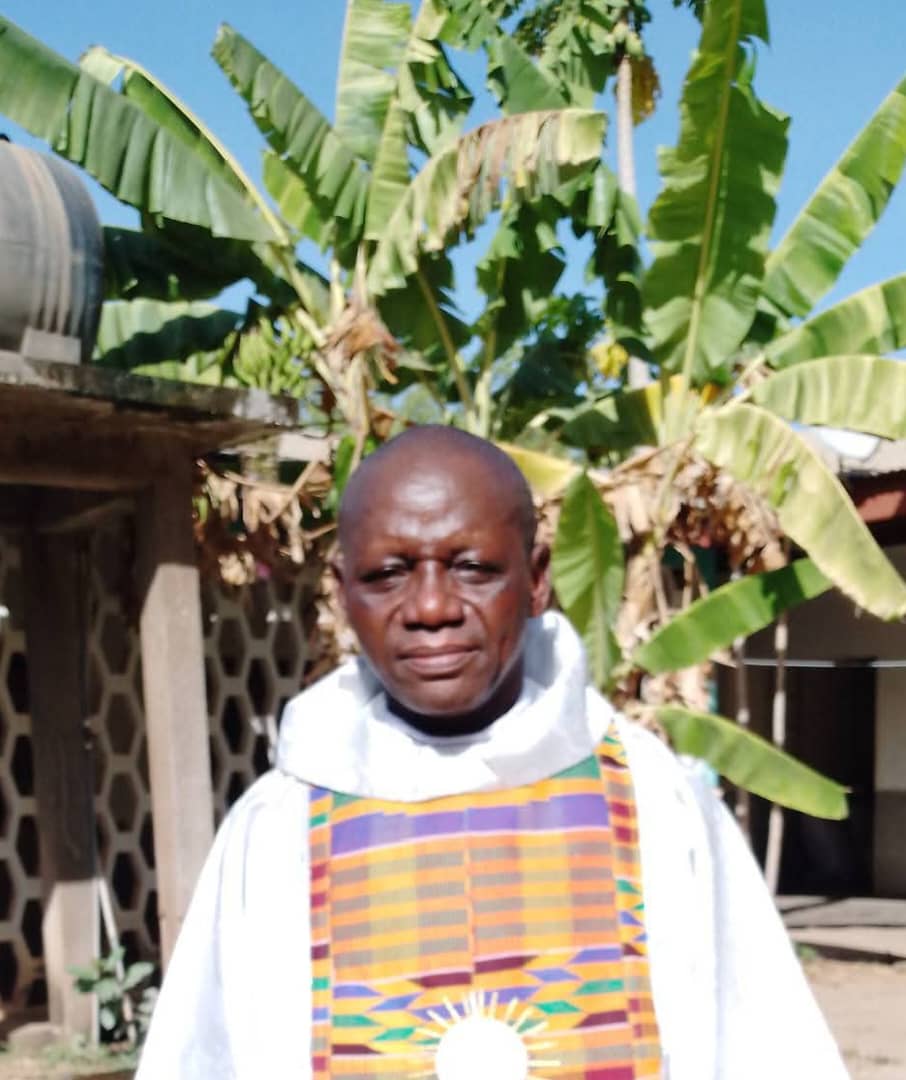
Rev. Fr. Aloysius Kpiebaya, Catholic Diocese of Wa, UW/R, Ghana. (00233) 0207867239/0545462863. Email: aloybaya20@yahoo.com.





No comments yet. Be the first to comment!