
A lot of people are acting like the first thing is the second thing. It's also familiar how Ghana reacts when corruption cases involve big names. It starts with laughter. After that, confidence. Then a steady stream of voices telling the public that the case is weak, political, or empty. The idea is always the same: this too will pass.
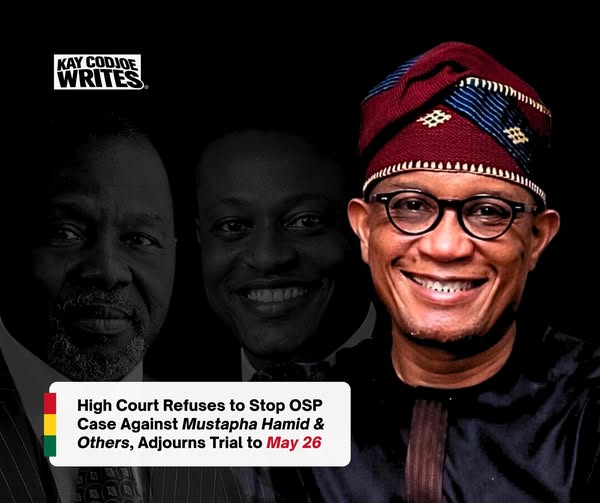
I swear that script is under a lot of stress right now. The defence in Republic v. Mustapha Hamid & Others seemed to see an opening. As the argument between the attorney general and the Office of the Special Prosecutor got worse, the plan was simple: if the OSP doesn't have the power to prosecute, the case falls apart. Ride the wave and finish the trial. But the wave didn't take the case. It broke, and the defence was left to argue like fans cheering for a losing team: loud, loyal, and outmatched by the score.
The High Court did not let the accused go. It did not drop the charges. It didn't say that the OSP had no power. It put the case on hold until higher courts made things clearer. To put it simply, the case is still going on.
So everything that the main voice behind the "useless case" story says is just technical language that hides the truth. The content remains the same, whether it is called a "application to discharge" or a "objection to capacity." There was a challenge. The court didn't accept it in a way that ended the case. That's where the argument that the OSP doesn't have power starts to fall apart. If the OSP really didn't have power, this case would be thrown out. It would be gone by now. It is moving forward instead.
If the Supreme Court took a stricter view that limited the OSP's role as a prosecutor, it would still not be an acquittal. It would only change the way the case is tried and where it is tried, not the substance of the accusations. The charges would still be able to be pursued by an authority that was properly authorised. So, any benefit that comes from the current constitutional contest would be procedural, not substantive.
Now, the case has gotten even worse: someone on the inside is working with the police. Albert Ankrah's role in the prosecution changes things. It goes from papers to choices, from deals to witness statements. That's when systems begin to communicate with one another. And that's when the pain gets worse.
The difference is clear when you look at how people act in public. This is the same Mustapha Hamid who talked a lot on Channel One TV about funding activities in different districts, like motorbikes, party support, and help for people, while also hinting at "many things" he didn't want to say. That story is now in a courtroom. Those claims always lead to a harder question: where did the money come from?
Some have started to question whether the resources he discussed in public could be directly or indirectly related to the monies currently under investigation, given the scope of the purported plan at the heart of this trial. That isn't a conclusion. The question is based on the facts. And only a courtroom can answer that kind of question.
However, his aspirations to become a politician have not diminished. His desire to run for the NPP's national vice chairman has raised its own concerns. A few perceive ambition. Others perceive strategy. Some have questioned whether political stance may provide as insulation. Some pose a more straightforward query: are there any contenders in the field who are not burdened with unresolved accusations?
The prosecution has been using asset trails, records, and transactions for months. It is now on the verge of testimony. Furthermore, testimony is more durable than commentary. This explains why the case was always dismissed too soon. The truth is straightforward. The case was taken to court by the OSP. It hasn't been shut down by the court. The facts are still being revealed. Therefore, the "no-authority" wave did not put a stop to the lawsuit. The High Court declined to stop it. The law will be decided by the Supreme Court. It has to.
One thing is certain until then: the case is not failing. It's getting deeper. And that's what makes me uneasy.
No comments yet. Be the first to comment!