
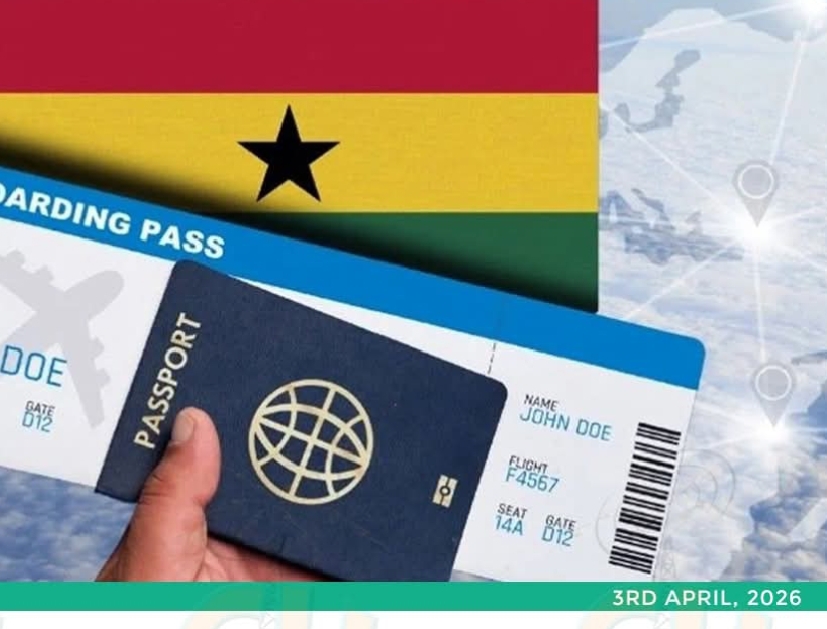
Ghana’s decision to grant visa-free entry to all African passport holders marks one of the most ambitious steps toward continental integration in recent history. Rooted in the ideals of African unity, economic cooperation, and free movement, the policy aligns with long-standing aspirations of a borderless Africa, where trade, tourism, and cultural exchange flourish without bureaucratic hindrance. Positioned as a gateway to the continent and host of key continental institutions, Ghana’s move has been widely applauded as visionary. Yet, beneath the optimism lies a complex web of challenges that demand urgent and careful attention.
At its core, the visa-free policy seeks to eliminate one of the most persistent barriers to intra-African mobility: restrictive visa regimes. For decades, Africans have faced more difficulty travelling within their own continent than travelling abroad. By opening its borders, Ghana is attempting to reverse this trend, encouraging business travel, tourism, and cross-cultural interaction. The policy is also expected to stimulate sectors such as hospitality, transport, and retail, while strengthening Ghana’s reputation as a regional hub.
However, as with any major policy shift, implementation has exposed underlying vulnerabilities. One of the most pressing concerns is border management. Visa-free entry, while eliminating pre-travel screening, places significant pressure on immigration systems at points of entry. Authorities must now rely heavily on real-time assessments, documentation checks, and intelligence-sharing mechanisms to identify potential risks. Without robust technological systems and well-trained personnel, this creates gaps that can be exploited.
Security concerns have become increasingly prominent in public discourse. While the vast majority of travellers enter Ghana for legitimate reasons, there are growing fears about individuals who may exploit the policy for unlawful activities. Reports and anecdotal evidence have pointed to instances where some foreign nationals engage in illicit operations, including fraud, unauthorised trading, and other criminal enterprises. These concerns, though sensitive, cannot be ignored, as they directly impact public safety and national stability.
Economic tensions have also surfaced, particularly within the informal sector. Ghana’s spare parts industry, for instance, has seen a noticeable increase in foreign participation. While competition is a natural feature of open markets, local traders have expressed concerns about unfair advantages, regulatory loopholes, and the displacement of indigenous businesses. The situation has, at times, led to friction, with calls for stricter enforcement of trade regulations and clearer guidelines on foreign participation in local markets.
It is important, however, to approach these issues with nuance and responsibility. Migration and mobility are not inherently problematic; rather, it is the absence of effective regulation and enforcement that creates challenges. Generalisations about any nationality risk undermining the very spirit of unity the policy seeks to promote. The focus must therefore remain on systems, not stereotypes, on strengthening institutions rather than assigning blame.
Another challenge lies in urban pressure. Increased inflow of people into major cities places additional strain on housing, sanitation, transportation, and social services. In a city already grappling with issues such as congestion and flooding, population surges, however gradual, can exacerbate existing infrastructural deficits. Without corresponding investments in urban planning and public services, the benefits of increased mobility may be overshadowed by declining living conditions.
Furthermore, the policy raises questions about reciprocity and continental readiness. While Ghana has taken a bold step, not all African countries have matched this level of openness. This creates an imbalance, where Ghanaian citizens may still face visa restrictions elsewhere, potentially limiting the full realisation of mutual benefits. A truly integrated Africa requires coordinated action, not isolated initiatives.
Despite these challenges, the visa-free policy remains a powerful symbol of what Africa can achieve through bold leadership. The task ahead is not to retreat, but to refine. Strengthening border technology, enhancing inter-agency collaboration, enforcing trade laws, and investing in infrastructure are critical steps toward ensuring that the policy delivers on its promise without compromising national interests.
Ghana stands at a crossroads. It can either allow the challenges to overshadow the vision or confront them with pragmatic reforms and strategic foresight. The success of this policy will ultimately depend not just on the openness of borders, but on the strength of the systems that support them. In navigating this delicate balance, Ghana has the opportunity to set a precedent—not only for West Africa, but for the entire continent.
The Trial News






No comments yet. Be the first to comment!