
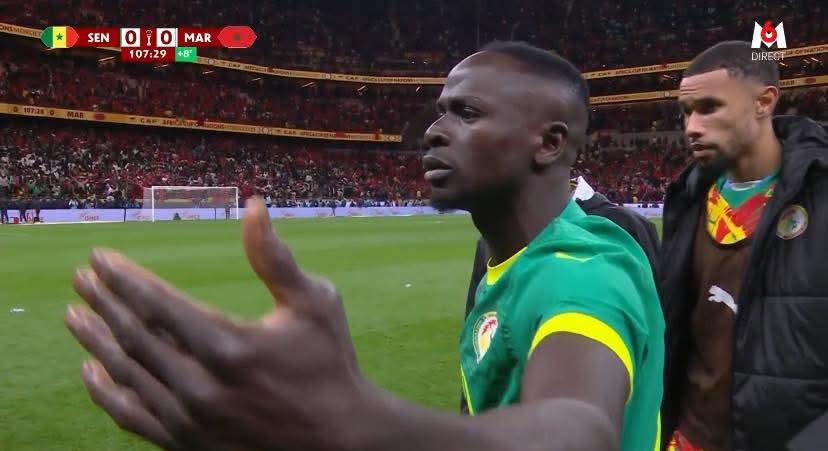
In what is fast becoming one of the most controversial decisions in African football history, the Confederation of African Football has stripped Senegal of its 2025 Africa Cup of Nations (AFCON) title and awarded it to Morocco—not on the pitch, but in the boardroom.
The decision, based on Senegal’s temporary walk-off during the final, has ignited outrage across the continent and beyond. It is not merely the ruling that has stunned observers—it is the timing, the process, and the precedent it sets.
CAF has anchored its decision on Articles 82 and 84 of its competition regulations. According to these provisions, if a team refuses to play or leaves the field without the referee’s authorisation, that team is deemed to have forfeited the match and loses by default. On the surface, this appears straightforward. Senegal’s players, protesting a controversial penalty decision, walked off the pitch for about 14 to 15 minutes before returning to complete the match.
CAF’s Appeal Board later ruled that this act constituted a breach of the regulations, overturning Senegal’s 1–0 victory and awarding Morocco a 3–0 win by forfeiture.
Yet, this is where the controversy deepens. If indeed the rules are clear—and CAF insists they are—then critical questions must be asked. Why did match officials not enforce the rule immediately? Why was the game not abandoned at the moment Senegal left the pitch? Why was Senegal allowed to return, finish the match, and ultimately win? Why was the trophy presented, medals awarded, and celebrations permitted—only for the result to be overturned weeks later?
The reality is undeniable. Senegal completed the match, won on the field, and were officially crowned champions, with celebrations witnessed by millions. To then reverse that outcome retrospectively raises serious concerns about consistency, competence, and credibility.
Football is governed not only by rules but by how and when those rules are applied. If a breach serious enough to warrant forfeiture occurs, it must be enforced immediately—not revisited after the final whistle, and certainly not after the trophy has been lifted. Anything short of that risks turning football into a legal contest rather than a sporting one.
This decision sets a troubling precedent: that a match result—even a final—can be rewritten after acceptance, based on interpretations applied long after the event.
The optics of this decision are equally troubling. Morocco was not just a finalist—it was the host nation. This raises an uncomfortable but necessary question: must the host nation also be the winner, regardless of what happens on the pitch? There is no direct evidence of undue influence, but in football governance, perception matters as much as procedure. Right now, the perception across Africa is one of selective justice.
Senegal must not let this matter rest. An appeal to FIFA is not only justified but necessary. If need be, the case should proceed to the Court of Arbitration for Sport. This is no longer just about a trophy—it is about the integrity of competition, the consistency of rule enforcement, and the credibility of African football governance.
CAF may claim to have applied its rules, but football is not governed by rules alone—it is governed by fairness, timing, and integrity. In stripping Senegal of a title already won, celebrated, and awarded, CAF has not just altered a result—it has shaken confidence in the very system meant to protect the game.
Until these questions are answered, one truth remains difficult to ignore: Senegal may have lost the title, but African football may have lost something far greater.
The Trial News







No comments yet. Be the first to comment!